Visual harvesting — your team thinks better when the thinking is on the wall
In most meetings, ideas live in people's heads or on their laptops. They get spoken once and forgotten. Visual harvesting captures ideas and concepts in real time — on large sheets, flip charts, or digital canvases — so the group can see, react to, and build on what they've produced together.
What is visual harvesting?
Visual harvesting is the practice of making group thinking visible during a session. The facilitator — or a dedicated visual harvester — draws, writes, and maps what the group says as it happens. By the end of the session, the wall shows the entire conversation: decisions made, ideas raised, tensions noted, next steps agreed.
It works because people think differently when they can see the group's thinking. Abstract discussions become concrete. Patterns emerge. Disagreements become visible — and addressable.
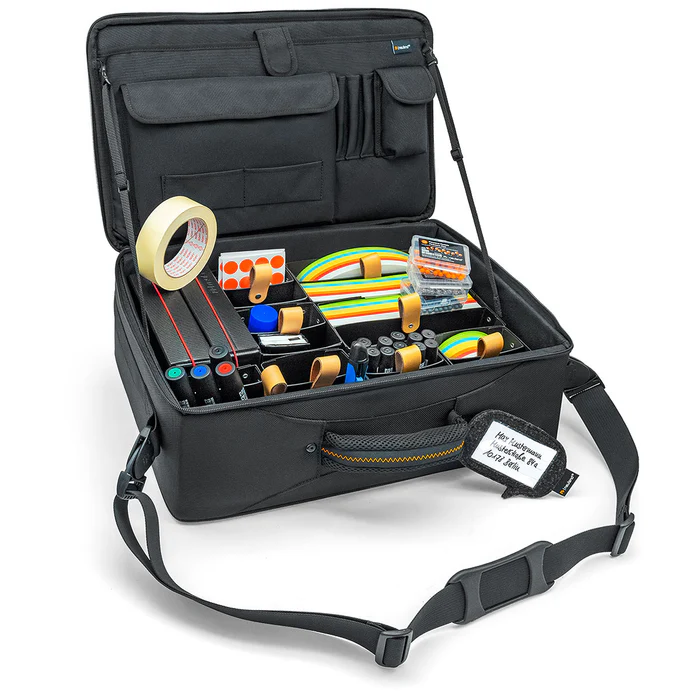
We work with Neuland materials — professional-grade markers and paper designed for large-format visual work.
When is visual harvesting not the right tool?
- When the output is confidential and cannot be displayed — visual work is visible to everyone in the room
- When the session is entirely verbal and linear — a written summary may be more appropriate
- When the facilitator needs to focus entirely on group dynamics — a dedicated harvester is better in complex sessions
How do we work with visual harvesting?
- We prepare a visual structure before the session — frameworks, spaces for input, flow indicators
- We capture in real time: key ideas, decisions, questions, tensions
- We make the invisible visible — if two people are saying the same thing in different words, it shows on the wall
- At the end of the session, participants photograph the full harvest — a shared record that needs no interpretation
What does visual harvesting look like in practice?
Strategy offsite: from flip chart graveyard to living reference
A leadership team's strategy offsite produced seven flip charts that nobody looked at after the event. The following year, we facilitated the same session with visual harvesting. The harvest became the reference document for the year — consulted in meetings, photographed and shared across the organisation.
Post-merger: making both cultures visible at once
In a post-merger integration session, visual harvesting made it possible to show both organisations' approaches side by side. The visual comparison surfaced shared values and genuine differences faster than any discussion could have.
Want your next session on the wall?
Tell us what you're working on. We'll tell you how visual harvesting fits.